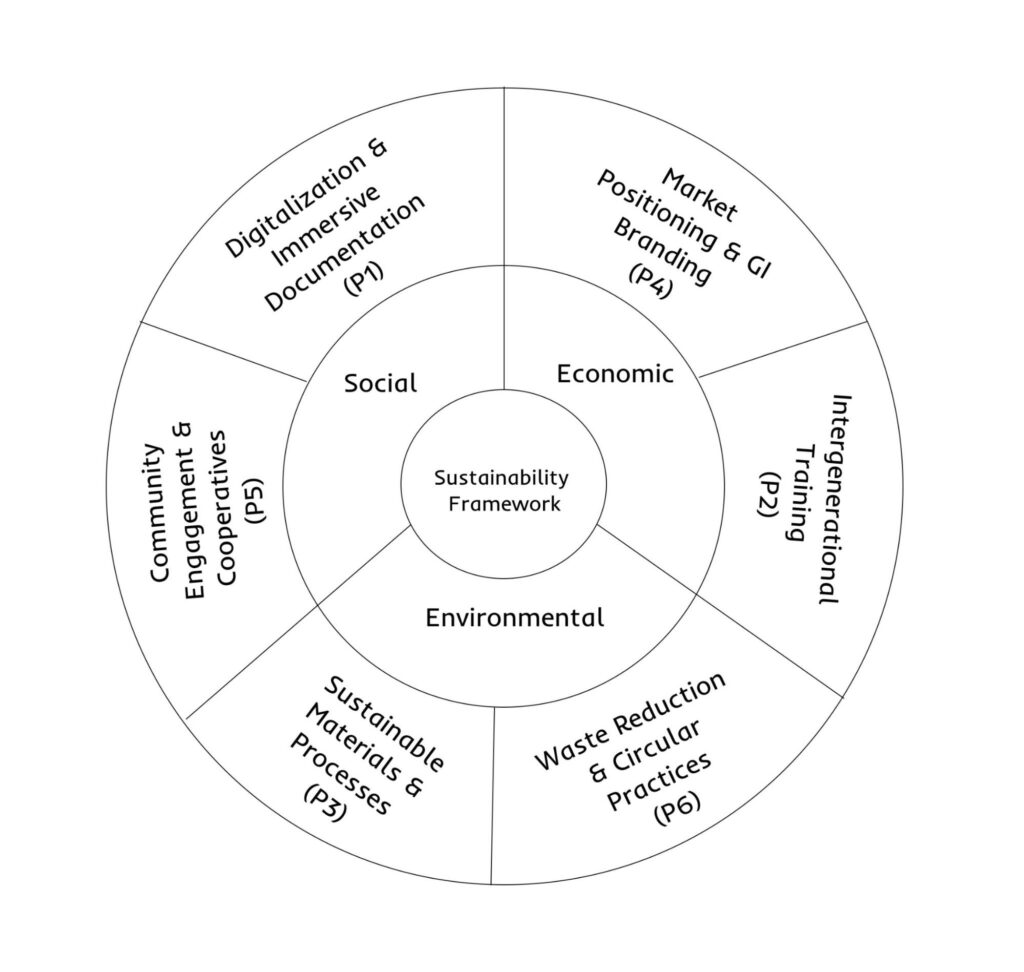
Technology &
Sustainability
Preserving Chettinad’s century-old architecture, landscapes and living traditions through the lens of modern technology – from digital mapping to immersive virtual experiences
"The built environment of Chettinad is not merely architecture — it is an archive of ecological wisdom, trade networks, and social ritual."
Understanding Chettinad Through Technology
Chettinad, the heartland of the Nattukkotai Chettiars in Tamil Nadu, is home to one of India’s most distinctive regional architectures — grand mansions built from Burma teak, Athangudi tiles, and Nattukotai lime plaster. Today, these structures face pressures from neglect, climate change, and the gradual erosion of traditional craftsmanship.
Technology offers a renewed lens to study, document, and protect this heritage. Through Geographic Information Systems (GIS), the Internet of Things (IoT), Virtual Reality (VR), and the integration of Indigenous Knowledge Systems (lKS) with contemporary science, researchers can build an evidence base that helps Chettinad’s communities make informed decisions about conservation and sustainable land use.
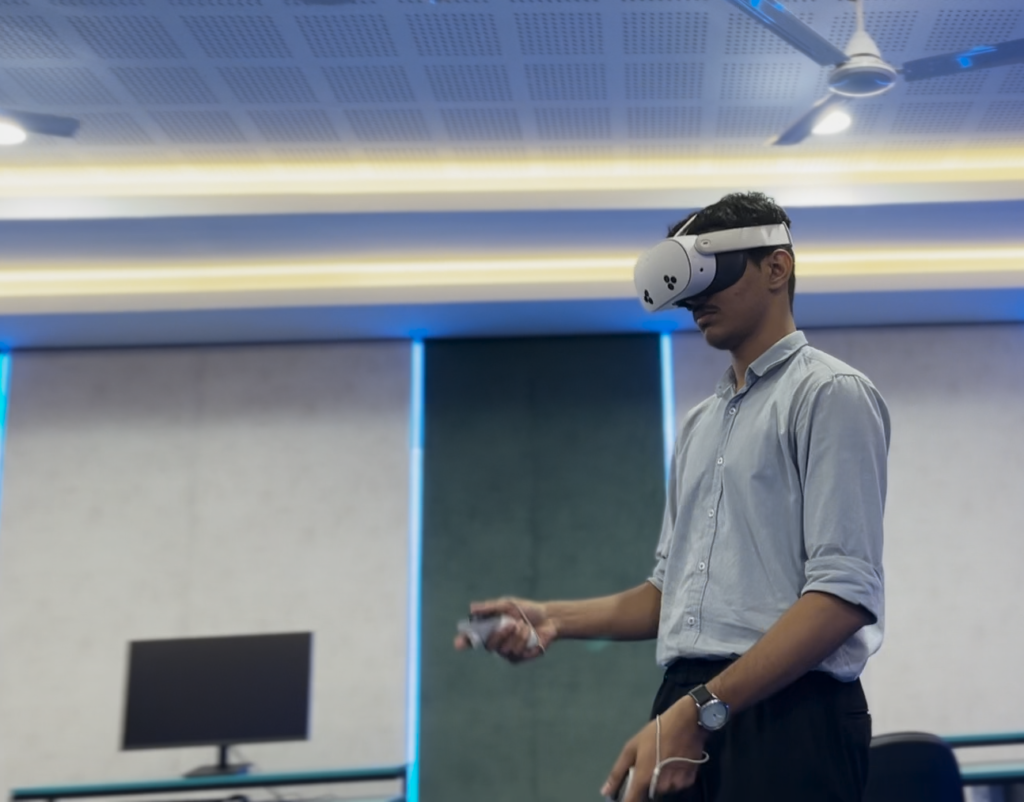
VR Application
Virtual Reality recreates the spatial experience of Chettinad’s mansions, rooms, courtyards, and ceremonial halls allowing researchers, students, and the global diaspora to engage with heritage that may no longer be physically accessible. These immersive environments are built from precise 3D scans and architectural documentation.
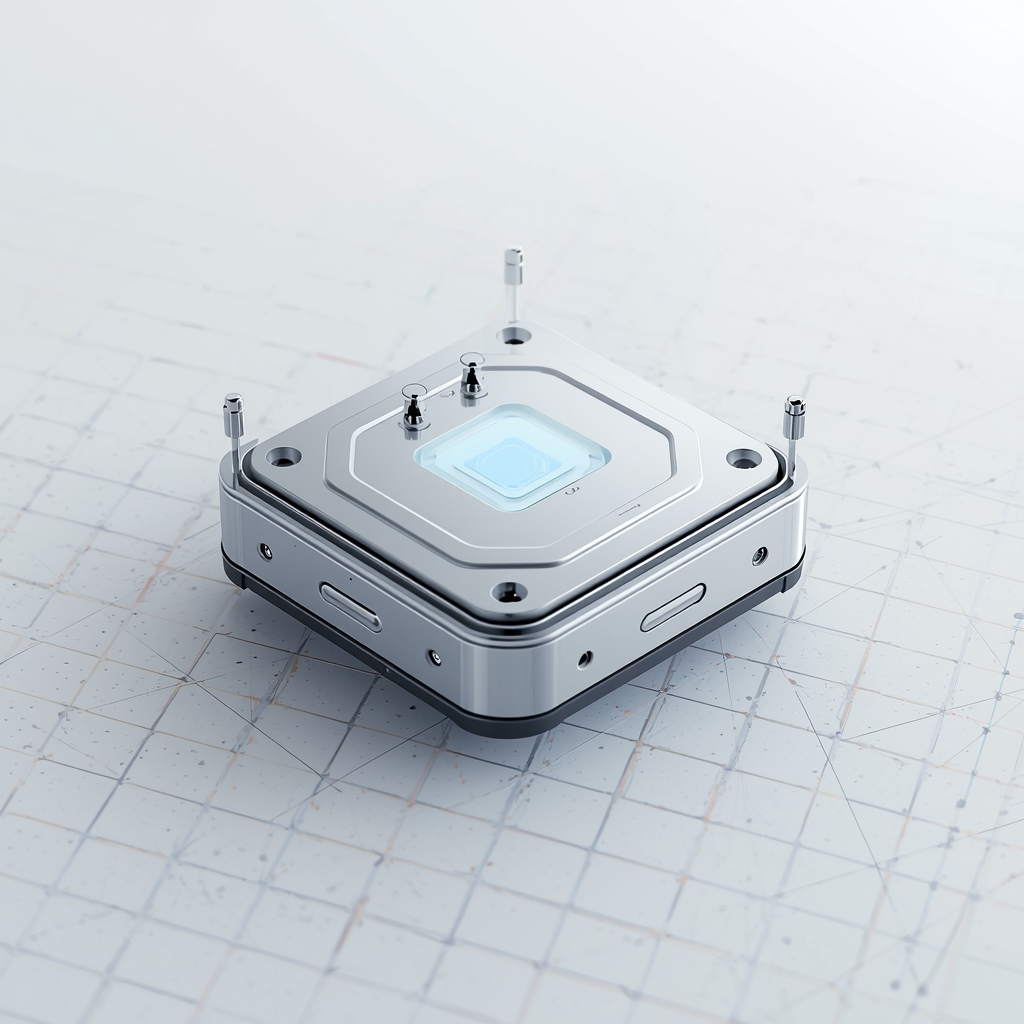
IoT Sensor Development
A network of low-cost IoT sensors installed across Chettinad villages continuously tracks temperature, humidity, structural vibration, and air quality within heritage buildings. This real-time data enables early detection of conservation threats and builds a long-term environmental archive for the region.
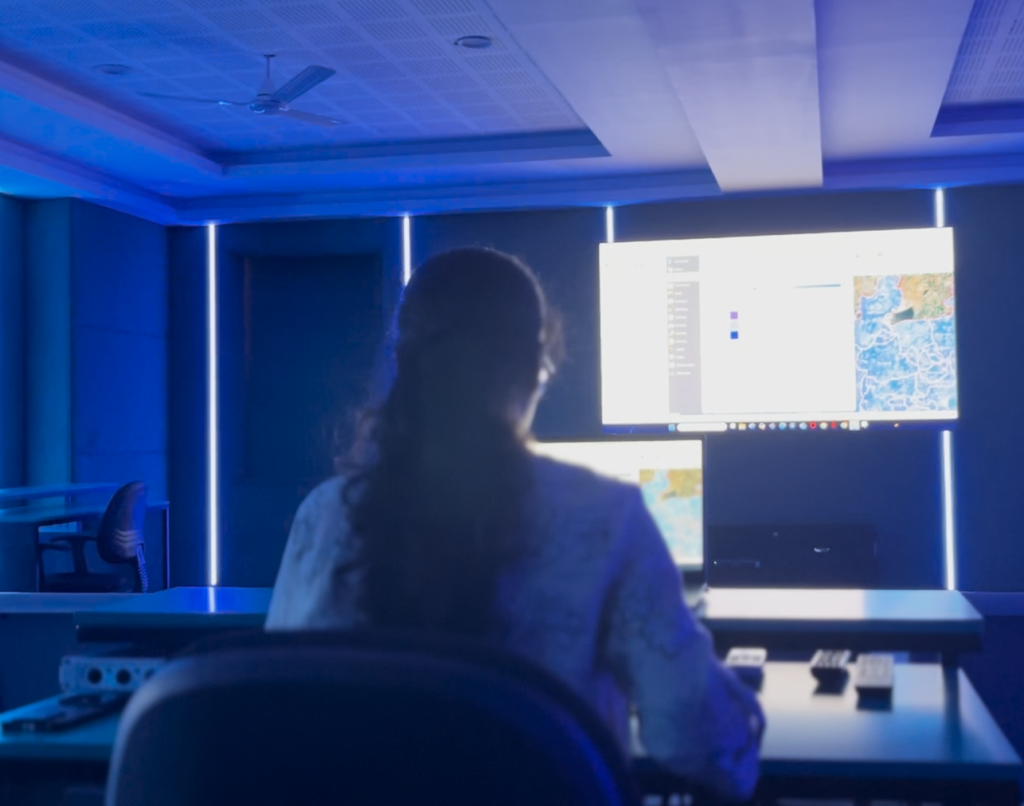
GIS Mapping
Geographic Information Systems map Chettinad’s physical and ecological landscape from its water bodies and agricultural land to the distribution of heritage settlements. GIS layers reveal the spatial
logic of how Chettinad communities organised their towns around trade routes, water systems, and ritual boundaries.
IKS + Scientific Integration
Chettinad’s builders, farmers, and healers developed sophisticated
knowledge systems over centuries — from passive ventilation techniques in mansion design to traditional water harvesting. This section explores how these Indigenous Knowledge Systems (IKS) can be validated, enriched, and preserved alongside contemporary scientific methods.