
Cultural &
Intangible Heritage
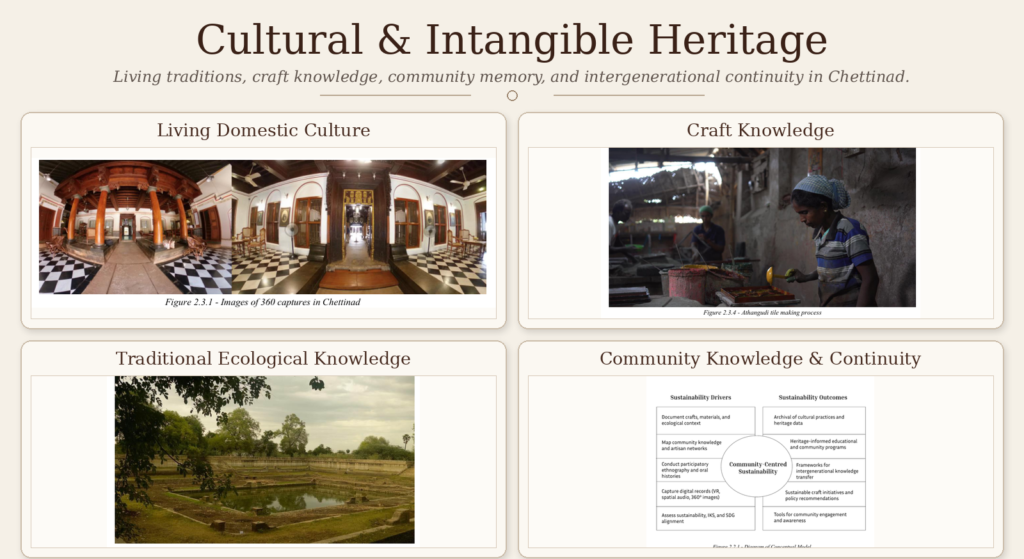
Chettinad’s cultural heritage lives through the everyday practices, knowledge, skills, rituals, and memories sustained by its communities. Its culinary traditions, religious observances, weddings, festivals, oral histories, temple music, domestic customs, and clan-based social practices give meaning to the region’s architectural and cultural landscape.
"The built environment of Chettinad is not merely architecture — it is an archive of ecological wisdom, trade networks, and social ritual."
Understanding Chettinad Through Culture
The project documented these living traditions through field observation, interviews, photography, audio-visual recording, community interaction, and empirical surveys. It also examined traditional knowledge embedded in crafts such as Kottan basket making, Kandangi weaving, Athangudi tile production, brass-lamp making, woodwork, stucco, and other practices transmitted through artisans, families, and local communities.
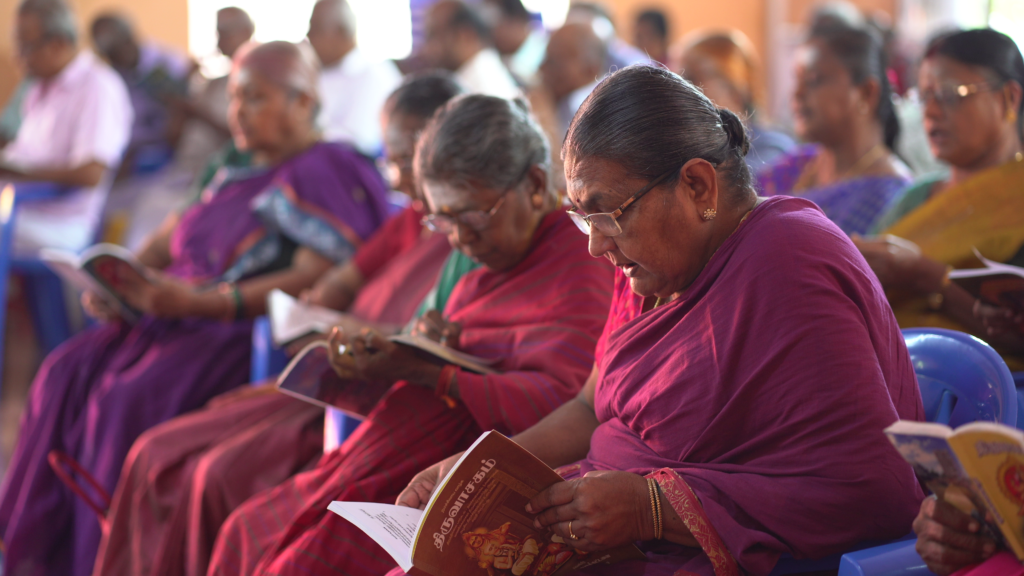
A dedicated study involving 126 women highlighted their central role in preserving Chettinad’s intangible cultural heritage. Through cuisine, rituals, festivals, family memory, storytelling, and the teaching of younger generations, women continue to sustain cultural identity within Chettinad and across migrant communities. The study also showed that digital connectivity increasingly supports the sharing and continuation of cultural knowledge.
This documentation presents intangible heritage as a living and adaptive process. It recognises the artisans, women, musicians, spiritual institutions, elders, and community members whose knowledge and participation keep Chettinad’s traditions relevant across generations.